Central European Conference
on Internationalisation
of Higher Education
CEEDUCON

Edition
Sessions
Participants
Speakers
From CZEDUCON to CEEDUCON – a new name, an international dimension
Over the past six years, the CZEDUCON conference has established itself as a key platform for discussions on the internationalisation of higher education. The new name, CEEDUCON (Central European Education Conference), better captures its international scope and its ambition to become a Central European hub for innovation and collaboration in education.
Main thematic areas

Smart & Sustainable International Cooperation

Internationalisation for All

Global & Regional Partnerships

Alumni — Employability — Future Skills
Smart & Sustainable International Cooperation
How can we connect internationalisation with digitalisation and sustainability, leveraging AI, smart mobility, and sustainable funding models to enhance global academic exchange?
- The digital age and its impact on internationalisation
- The role of AI in internationalisation
- Smart mobility for student and faculty exchange
- Green campuses and sustainability in higher education
- Online and hybrid models of mobility
- Sustainable mobility and ecologically responsible internationalisation
- Internationalisation in geopolitical and economic challenges
- Smart student recruitment and marketing strategies
- Sustainable funding models for international cooperation, such as public-private partnerships, endowments/foundations, and alumni support


Internationalisation for All
How can we break down barriers to international experiences, promote global citizenship education, expand language opportunities, and improve career prospects and wellbeing for all students and staff involved?
- Barriers in international student and staff support
- Active citizenship: going above and beyond
- Volunteering programmes at home and abroad
- Student, PhD, and alumni networks
- Language opportunities within student communities
- Job market and career prospects for students with international experience
- Student wellbeing
- Edutainment: merging education and entertainment
- The future of university teaching and the role of internationalisation
- Global citizenship education as a core component of internationalisation: equipping students with the skills and mindset needed to navigate a globalised world
Global & Regional Partnerships
How can we strengthen global and regional academic ties, with a focus on emerging regions, fostering talent mobility, and adapting international cooperation strategies to geopolitical and economic shifts?
- Academic freedom, security and ethical issues of internationalisation
- Brain circulation: how to attract and retain talent in Europe
- European university alliances and cooperation with non-members
- Central European perspectives on internationalisation in higher education
- Strengthening cooperation between European and global partners, including regions outside traditional partnerships, with a focus on specific areas such as Africa, Asia, the Balkans, and Latin America
- Exploring alternative projects to Erasmus, such as Jean Monnet, ERA Chair, and bilateral cooperation while highlighting complementarities with other international exchange programmes
Alumni — Employability — Future Skills
How can universities equip graduates with the skills necessary for the modern labour market, encourage entrepreneurship, support lifelong learning, and leverage alumni networks for career development?
- The role of alumni in shaping university policies, programmes, and curricula
- Data-driven insights: tracking alumni employability and success
- The growing importance of co-curricular learning—such as internships, volunteering, and skill-building outside the classroom—in shaping well-rounded graduates
- The role of universities in preparing students for the future labour market and building connections with businesses
- International graduates and their transition into the job market
- How can we ensure that graduates develop competencies for the global economy?
- Supporting entrepreneurship, startups, and applied research in education
- The gig economy and its impact on education
- Bridging the gap between students and alumni
- Alumni as ambassadors: strengthening the connection between universities and international graduates
- Leveraging alumni networks for career development and global networking opportunities
- Lifelong learning and upskilling: how alumni can stay relevant in their careers
Programme
Wednesday, 19th November
Smart & Sustainable International Cooperation
Internationalisation for All
Global & Regional Partnerships
Alumni — Employability — Future Skills

Conference Opening
Michal Uhl, Director, DZS - Czech National Agency for International Education and Research
Jaroslav Miller, Chairman, National Accreditation Bureau for Higher Education
Keynote
Stefan Zotti, Deputy Head of Higher education Unit, European Commission (DG EAC)
See the video
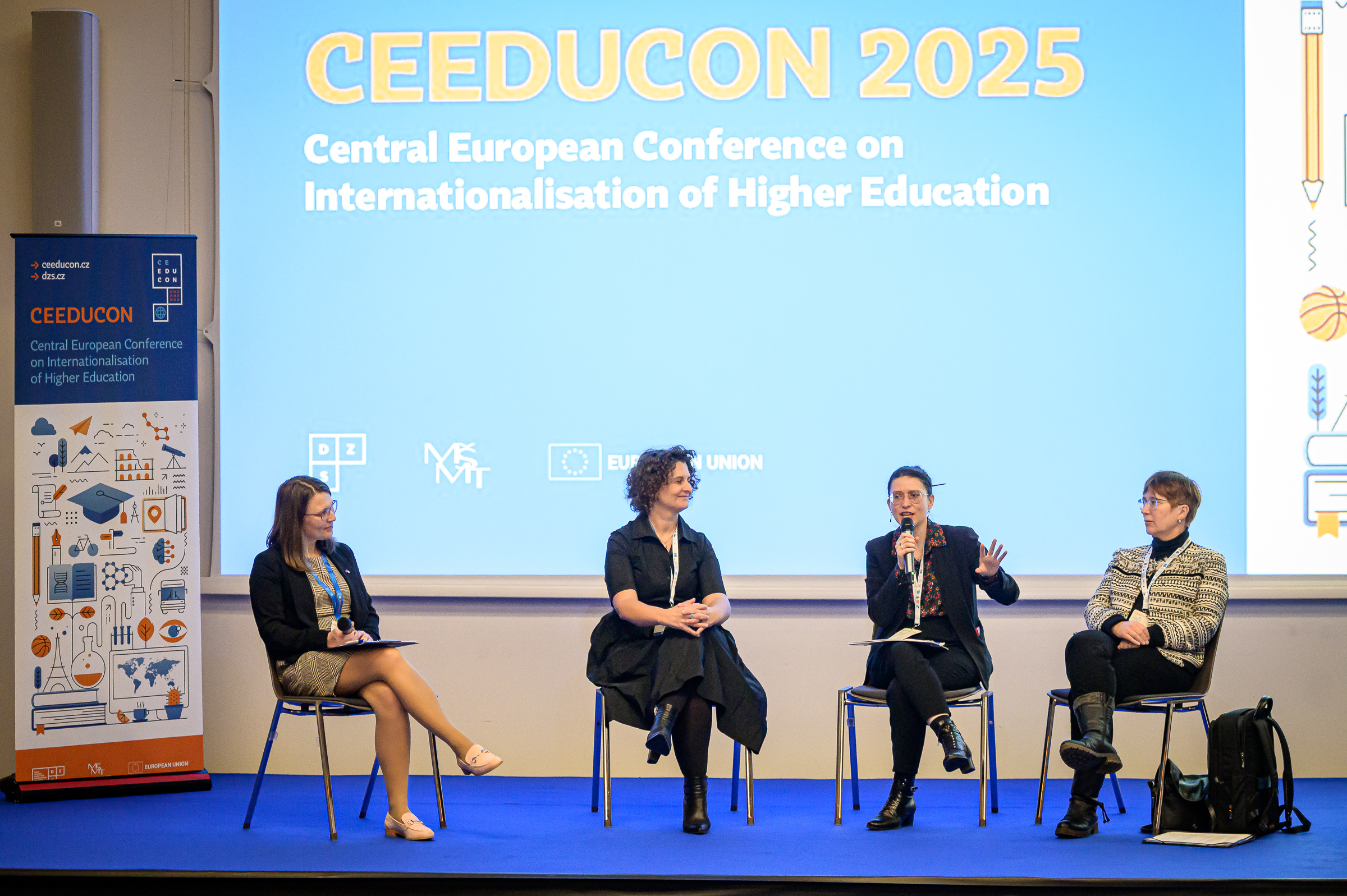
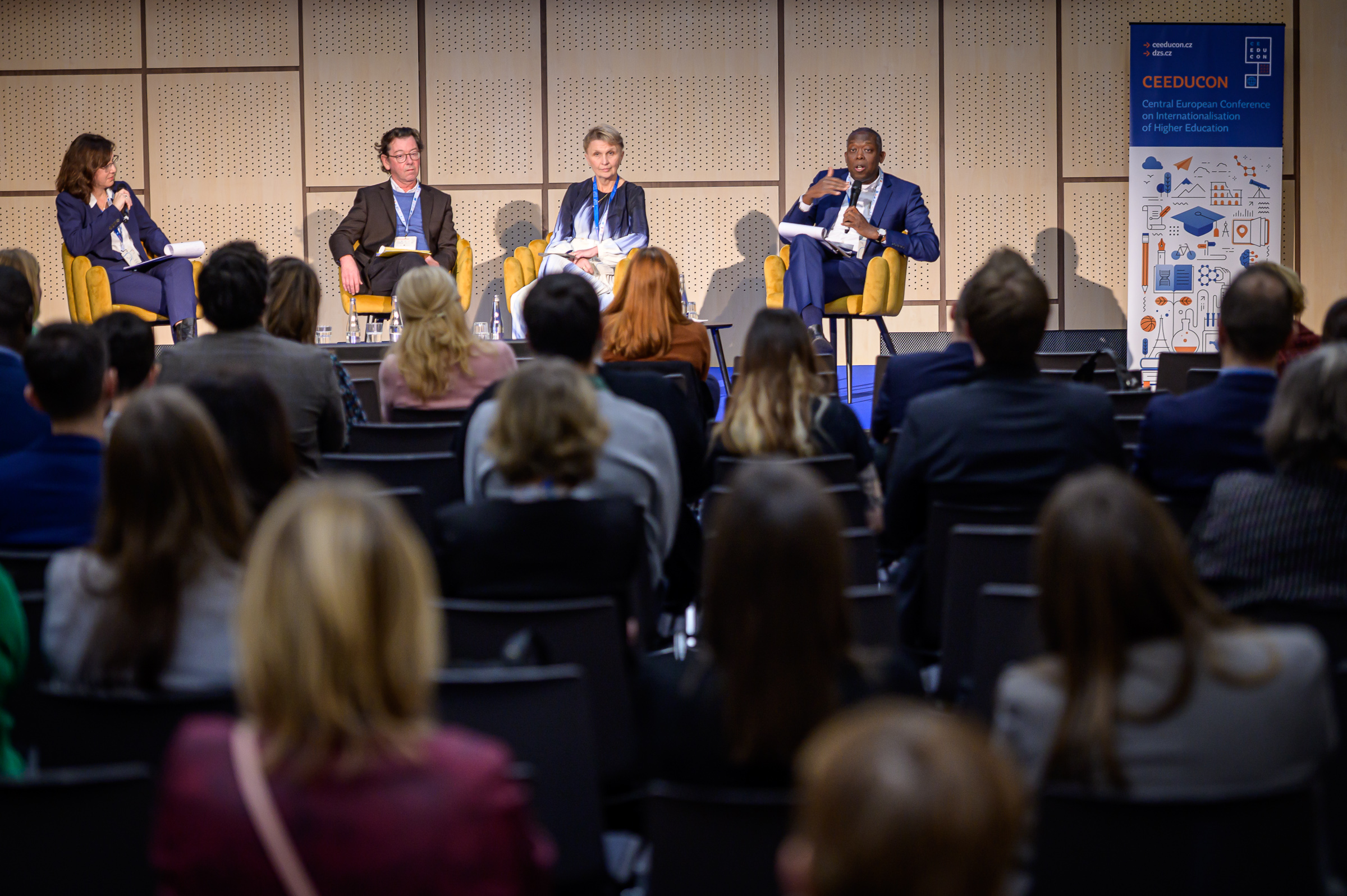
Opening Panel
Stefan Zotti, Deputy Head of Higher education Unit, European Commission (DG EAC),
Soňa Lippmann, Head of Communication and Analytical Division, DZS - Czech National Agency for International Education and Research,
Richard Bodrógi, Director-General, Tempus Public Foundation,
Dr. Magdalena Barwiołek, Prof. UMK, Vice-Rector for International Relations, Nicolaus Copernicus University
Thematic Areas:
Study in Europe: Attracting and retaining international talent in Central Europe
- • The role of regional consortia and European University Alliances, and the effectiveness of joint EU promotion abroad
- • Supporting the transition of international students into the labour market and their retention after graduation
- • The involvement of alumni in international activities and policy shaping
Reimagining internationalisation for the next decade
- • Building strategic partnerships in a shifting world
- • The impact of geopolitics, climate challenges, and AI on the concept of internationalisation
- • Ensuring accessibility of internationalisation for a broader range of students and academics
Moderated by Daniel Casten
See the video
The session focuses on the increasing intensity of full-degree inbound international mobility and its impact on co-learning between domestic and international students within the Hungarian higher education context. Its objective is to explore how institutional approaches to collaboration among all students have evolved and to identify tools to support universities in enhancing these processes. The session will discuss key research findings and the implications of related capacity-building activities.
Georgina Kasza - Tempus Public Foundation, Andrea Vörös - Tempus Public Foundation
Download the presentation
See the video
This session will present findings and insights from a joint research project by the ACA (Academic Cooperation Association) and the EAIE (European Association for International Education) on national strategies/policies for internationalisation across Europe. A presentation of key data and trends will be followed by a moderated discussion with national-level representatives reflecting on trends, challenges, and opportunities. The session will conclude with an open Q&A with participants.
Jody Hoekstra-Selten - European Association for International Education, Gerhard Volz - OeAD, Jenny Nygård - The Academic Cooperation Association, Eero Loonurm - The Education and Youth Board
Download the presentation
See the video
Join us for a dynamic panel unveiling fresh data on student mobility trends, from top destinations to the uptake of green travel grants. We’ll identify key barriers holding students back from choosing sustainable transportation alternatives and share best practices to accelerate the green transition in international mobility. Get insights, get inspired, and help shape a greener future for Erasmus+ opportunities!
Salome Dermati - European University Foundation, Neli Kalinova-Schmieder - Erasmus Student Network, Petra Šmídová - Charles University
Download the presentation
See the video
The session will present the EU co-funded project AUREA, which aims to advance automatic recognition for credit mobility students by identifying barriers, analysing current practices, and offering policy recommendations. It supports higher education institutions with tools to assess their readiness, fosters a shared understanding across Europe, and promotes evidence-based policymaking to ensure fair and inclusive mobility. AUREA seeks to break down barriers and enable internationalisation for all.
Jeanne Cuny - European Students' Union
Download the presentation
See the video
Internationalisation, to be truly inclusive, requires embedding it in the formal curriculum for all students. Yet many HEIs rely on ad hoc initiatives with limited reach. Educators often lack know-how, support, and incentives. Institutions, in turn, often lack the strategies and structures needed to enable and sustain change. This panel explores systemic factors for institutional change and shares innovative practices from key perspectives: IROs, strategy, pedagogical centres, and teachers.
Lucie Weissova - Halmstad University, Simon Holmesson - Halmstad University, Lukáš Kala - Mendel University in Brno, Bartłomiej Wróblewski - Charles University
Download the presentation
See the video
Today's global geopolitics suggest that the order we once believed we could impose on global affairs has been lost. Multiple wars, assaults on leading institutions of learning in the US, and a global economy upended by unnecessary tariffs have ushered in a period of deep anxiety. This session will explore critical perspectives on geopolitical challenges by three international education leaders from Czechia, the Netherlands, and the USA including: · Internationalisation and its relevance to global geopolitics · The urgent imperative for collaborations through new institutional, global and regional partnerships · Intercultural communications as a response to the need for more successful human interactions in a world in turmoil.
Eva Janebová - Mestenhauser Institute for International Collaboration, Lenka Henebergová - Charles University, Harvey Charles - Gateway International Group, Jos Beelen - The Hague University of Applied Sciences
Download the presentation
See the video
Virtual Exchange (VE) remains underdeveloped in rural regions like the Mekong Delta, despite its strong potential for advancing internationalisation. Based on a survey of nearly 100 participants at Tra Vinh University (Vietnam), we highlight VE capabilities and key challenges. In an interactive World Café, we will showcase practical approaches to the challenges, exchange experiences, and collaboratively develop strategies to strengthen digital collaboration in rural/less-developed areas.
Nicole Ondrusch - Heilbronn University of Applied Sciences, Hoa Châu Thị Hoàng - Tra Vinh University, Mai Khanh Nguyen Thi - Tra Vinh University, Veronica Quandt - Heilbronn University of Applied Sciences
Download the presentation
See the video
The presentation will highlight how strengthening STEM education is essential for the EU’s competitiveness. It will focus on future and transferable skills expected from STEM graduates, based on a national survey conducted by Brno University of Technology among almost 400 STEM employers, as well as outcomes from national and international initiatives. The role of universities will be explored, showing how curricula are being adapted with industry to equip STEM graduates for a changing labour market.
Ladislav Janíček - Brno University of Technology
Download the presentation
See the video
International students and alumni matter - for our universities, economies, job markets, and societies. This session presents case studies from the Czech and Estonian national agencies on how they advocate for international students at national and international levels. Learn how they approach evidence-based advocacy, build strong narratives, and use data, economic impact, and tailored messaging to engage governments and other stakeholders.
Soňa Lippmann - Czech National Agency for International Education and Research, Eero Loonurm - The Education and Youth Board
Download the presentation
See the video
This workshop provides university staff with a structured introduction to the European Solidarity Corps (ESC), an EU-funded initiative that fosters youth volunteering and civic participation. The session will explore strategies for supporting student engagement in local and international solidarity activities and identify opportunities for institutional involvement. This will also be exemplified through a participating institution, Charles University, the largest and one of the oldest universities in Central Europe, which combines a strong academic tradition with active engagement in societal challenges. As one of the two Czech universities holding the ESC Quality Label, it has hosted international volunteers since 2023. The presentation will highlight how volunteering activities are integrated into the university environment, where volunteers support local and international events, contribute to student integration, and co-create community outreach initiatives. Examples of good practice will illustrate the added value of ESC for students, staff, and the wider community, and offer inspiration for other higher education institutions.
Olivia Hynne - Nord University, Natálie Wolfová - Charles University, Lenka Martináková - Czech National Agency for International Education and Research, Theodor L. Háva - Czech National Agency for International Education and Research
Download the presentation
An interactive futures literacy lab exploring how European Universities can co-create inclusive and lasting international student communities. Drawing on best practices from the Aurora Alliance, participants will imagine alternative futures, prototype new initiatives, and reframe assumptions about student communities in a changing, digitalised world. Through creative collaboration, this workshop will empower professionals to build future-proof student engagement programmes.
Niels Hexpoor - Palacký University Olomouc
Download the presentation
We are happy to share a case study of the launch of new questionnaires to collect experiences from placements and internships abroad. We have been working on the questionnaire in a team of nine people for three quarters of a year (custom solution), and we are very pleased with the results in the first two calls. We would like to inspire others to do so, as we see sharing experiences as one of the key elements in motivating and removing barriers for Generation Z.
Martin Jaroš - Masaryk University, Jakub Motyčka - Masaryk University
Download the presentation
As part of an international student project, we developed "Didactic Bingo"—an interactive tool for evaluating teaching behaviours in intercultural classrooms. Designed by seven Erasmus students at the University of Warsaw, it supports feedback through low-effort, engaging observation. We’ll share its creation process, first results, and potential for wider adaptation.
Marek Smulczyk - University of Warsaw
Download the presentation
This session explores the accomplishments of European Alliances in fostering long-term international cooperation through strategic partnerships in the CEE region and beyond. We will share findings from a survey involving 20 Alliances from the 4EU4ALL ‘Internationalisation and Global Outreach’ working group and present case studies of sustainable engagement programmes from Aurora, EUNICE, and Ulysseus. Our aim is to share enablers and best practices and to demonstrate how the Alliances are advancing the internationalisation of European higher education with a global impact.
Selma Porobić - Palacký University Olomouc, Magdalena Sikorska - Eunice European University Alliance, John Gardiner - Ulysseus European University Alliance, Silvia Rucinska - Pavol Jozef Safarik University Kosice
Download the presentation
On the occasion of the 20 years of collaboration between the public SUNY Empire State University and the private Czech partner University of New York in Prague, this session explores how a long-term dual-degree partnership has adapted to shifting educational, economic, and legislative demands. Focusing on mobility, regional specifics, and long-term sustainability, we offer lessons and strategies for building resilient academic partnerships in emerging and transitional regions.
Todd Nesbitt - SUNY Empire State University, Jana Ter-Akopow Čemusová - University of New York in Prague
Download the presentation
Presentation/discussion on the imporance of Quality Assurance in EMJM programmes, which ensures academic excellence, transparency, and continuous improvement across institutions. It will be showed safeguards of the integrity of joint degrees, promoting mutual trust, and enhancing international recognition. It will be also presented student-centered learning and alignment with European Higher Education standards, which fosters a high-quality, globally competitive education.
Martin Mejstřík - Charles University
Download the presentation
This session delves into how joint support structures within a European University Alliance can drive impactful teaching and learning transformations across member institutions. Perspectives on the co-creation of the EPICUR Centre for Teaching and Learning's offers and activities will be explored by the Centre's Co-Lead and the Director of International Affairs of one of the nine EPICUR partner universities. Participants are invited to discuss transfer potential across institutional contexts.
Dorthe Hutz-Nierhoff - University of Freiburg, Donna Hurford - University of Southern Denmark, Léa Ziri - University of Haute Alsace, Lisa Hüther-Pape - University of Freiburg
Download the presentation
This session is designed for colleagues managing international alumni relations and seeking to enhance their work with new insights. Topics include alumni meetups and reunion activities ideas, LinkedIn engagement, the integration of AI in daily tasks, fundraising, international professional networking, and other inspiring ideas.
Oleg Fetisov - Czech Technical University in Prague, Anita Straujuma - Riga Technical University, Rachel Bray - European Organization for Nuclear Research
Download the presentation
"Career Project Preparation for French-Speaking Students and Intercultural Differences in the European Labour Market" is a Virtual Exchange course offered by four EDUC universities. Since 2021, it has helped students enhance their intercultural competence, increase their motivation to study and work abroad, and develop employability and work-related skills. The presentation will showcase best practices, discuss challenges encountered, and explore changes implemented based on alumni feedback.
Hana Delalande - Masaryk University, Marie Beillet - University of Paris Nanterre, Marta Kobor - University of Pécs
Download the presentation
This session presents “Europa macht Schule,” a German programme where international students lead intercultural projects in local schools. It promotes global citizenship, early awareness of mobility opportunities, and internationalisation at home. A best practice from Fulda will be showcased, including perspectives from a former participant. The programme aims to expand beyond Germany through European cooperation.
Gideon Zoller - Institute for Interdisciplinary Research
Download the presentation
How can we prepare students for a labour market shaped by uncertainty, complexity, and mobility? This session introduces a practical, semester-long career course piloted at three Czech universities and grounded in the Chaos Theory of Careers. The course fosters adaptability, networking confidence, and future-ready skills aligned with global employability and lifelong learning. We share tested strategies, data, and critical reflections.
Přemysl Gubani - Czech University of Life Sciences Prague
Download the presentation
The SALTO Centre for Inclusion & Diversity ET and ACA will publish a guide on creating inclusion officer roles in HEIs using Erasmus+ tools. In a panel with a featured interviewee, working both in a higher education institution and in a European University Alliance, they will share key findings, challenges, and benefits. The discussion will focus on practical steps, advocacy, and real-life examples. Attendees will explore and discuss how to implement this role in their own institutions.
Martin Bogdan - The Academic Cooperation Association, Aaron Kang - Technical University of Darmstadt, Petra Habulin Musladin - Agency for Mobility and EU Programmes
Download the presentation
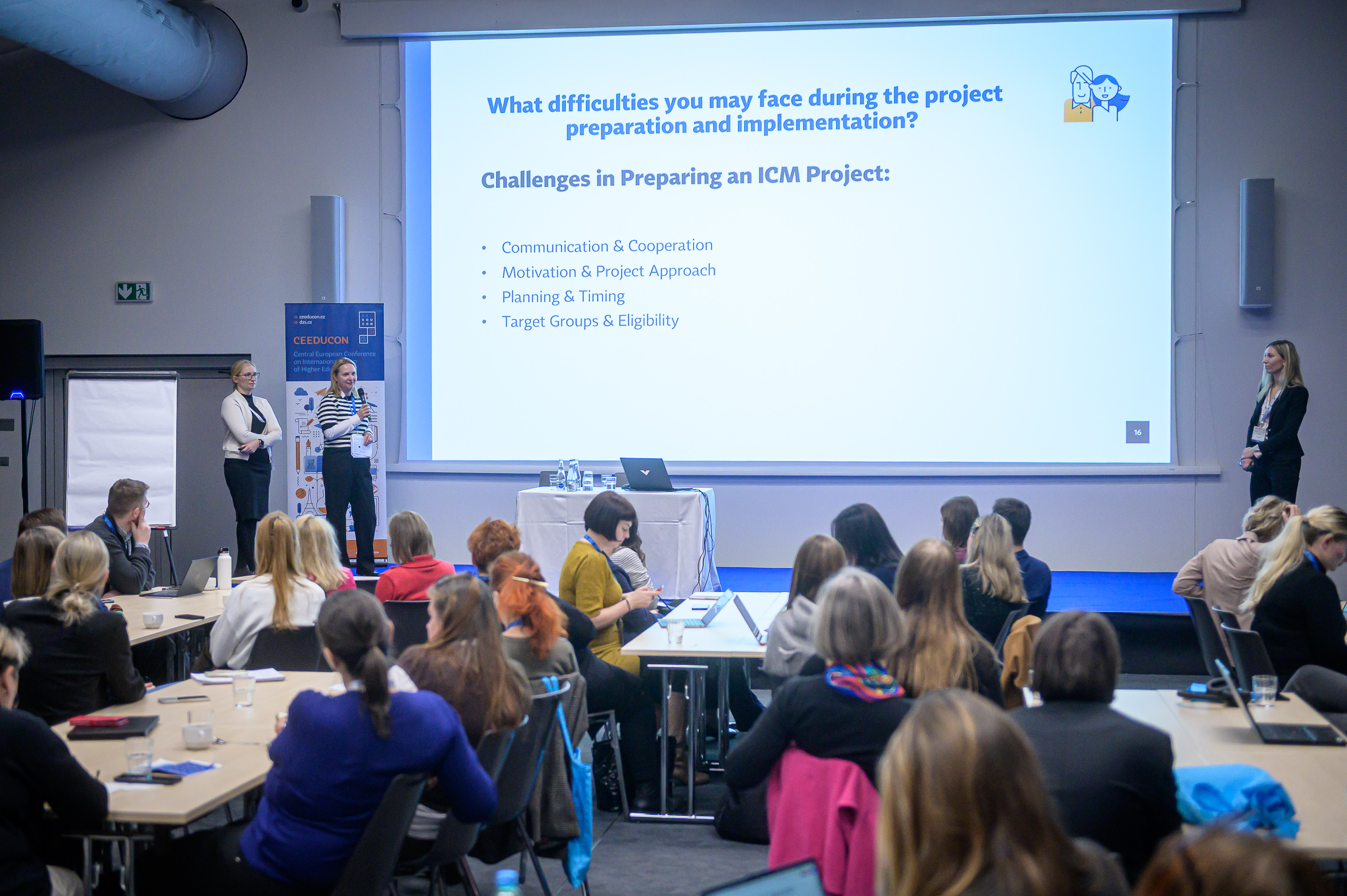
International Credit Mobility is a valuable opportunity to strengthen global partnerships. However, successful project preparation and implementation often hinge on the active engagement of academic and administrative staff. How can failures in communication be prevented and smooth implementation ensured?
Veronika Meca - Technical University of Ostrava, Lenka Heczková - Technical University of Ostrava, Monika Krejzková - Technical University of Ostrava
Download the presentation
The session explores common challenges and differences in Recognition of prior learning (RPL) practices across the EHEA. Experts from the European RPL Network will compare practices of different European countries . The discussion will focus on how RPL contributes to lifelong learning and strengthens competence profiles relevant to societal needs. It will also reflect on developments at the European policy level. Audience insights and experiences will be actively invited to enrich the dialogue.
Tilman Dörr - German Rectors' Conference, Agnes Witzani - Agency for Quality Assurance and Accreditation Austria
Download the presentation
Internationalisation has to be inclusive and inclusion has to be international. The SENSEI academy, a partnership in excellence under Erasmus+ is bridging this gap in a unique cross-sectoral way that brings together universities, schools, teacher training institutions and enterprises across Europe. The session will showcase practical training activities and provide information on the SENSEI approach, which is applicable to many sectors.
Uwe Brandenburg - Global Impact Institute, Andjela Kostić Minić - Center for Professional Development in Education in Leskovac, Jana Chocholatá - Masaryk University, Monika Mandelíčková - Labyrinth - gymnázium a základní škola Brno
Download the presentation
Discover how AI can support international offices with practical tools to streamline communication, simplify content creation, and enhance support for international students. In three interactive sessions, participants will explore AI-driven techniques for creating engaging mobility slogans, simplifying and translating texts, and designing visual step - by - step guides. No prior experience is needed — just curiosity and a smartphone to enrich the experience.
Leila Inštitorisová - Masaryk University
Download the presentation
At U!REKA, cocreation is more than a value—it’s the foundation of everything we do. At VSB-TUO, we’ve embraced this spirit to develop truly U!REKA Blended Intensive Programmes (BIPs), built through deep collaboration across our alliance. In this presentation, we’ll share how our BIPs embody the U!REKA vision, highlighting the power of collective design, shared ownership, and meaningful intercultural learning.
Monika Maňáková - Technical University of Ostrava, Marcela Maturová - Technical University of Ostrava
Download the presentation
While sending students for mobility is clear due to the existence of many regulations and guidelines, ensuring internationalisation at home initiatives is left for interpretation by every institution. Mobility alumni, when asked about the satisfaction of reintegration after mobility, have rated such services, on average, at 2.66 out of 5 (ESNsurvey XV, n=10,532). In this interactive session, participants will brainstorm and collaborate on how to engage mobility alumni in internationalisation processes and how youth organisations can create synergies to support HEIs in this aspect. The session will be facilitated by two young leaders of the Erasmus Student Network, Veronika from the Czech Republic and Anna from Poland, enabling the cross-country practice sharing.
Anna Kowalczyk - Erasmus Student Network Poland, Veronika Plchová - Erasmus Student Network Czech Republic
Download the presentation
Benedetta Gennaro - Technical University of Darmstadt, Aaron Kang - Technical University of Darmstadt, Lisa Kattinger - Marburg University
Download the presentation
-
REGISTRATION OPEN08:10 - 08:25
-
Opening08:25 - 08:40
-
Coffee Break08:40 - 08:55
-
Opening panel08:55 - 09:25
-
Lunch09:25 - 09:40
-
Learning Together: New Approaches to Collaboration Between Domestic and International Students09:40 - 10:10
-
10:10 - 10:15
-
A Snapshot of National Policies for Internationalisation in Europe Today10:15 - 10:45
-
Coffee Break10:45 - 11:00
-
Enabling Green Mobility: Student Perspectives and University Practices11:00 - 11:30
-
08:25 - 08:40
-
Unlocking Opportunities European Solidarity Corps programme08:55 - 09:25
-
Next Gen Student Communities: Futures Thinking for European Universities09:40 - 10:10
-
Questionnaire – Experience from Abroad10:15 - 10:45
-
Didactic Erasmus Bingo: A Playful Tool for Evaluating Teaching Methods in Higher Education11:00 - 11:30
-
Advancing Strategic Global & Regional Partnerships: Insights and Lessons from European University Alliances08:55 - 09:25
-
But It Really Is Our Degree: 20 Years of International Partnership – Lessons Learned09:40 - 10:10
-
Quality Assurance in Erasmus Mundus Programmes: Good Practice and Processes10:15 - 10:45
-
Empowering Educators: Border-crossing co-creation in the EPICUR Centre for International Teaching and Learning11:00 - 11:30
-
Modern Trends, Technologies, and Tools to Boost International Alumni Relations08:55 - 09:25
-
Developing Intercultural Competence and Work-Related Skills Thanks to a Virtual Exchange Project09:40 - 10:10
-
Europe Comes to Class: A Best Practice from Germany’s "Europa macht Schule" Program10:15 - 10:45
-
Careers in Chaos: Career Education for a Changing Global Market11:00 - 11:30
-
The Emerging Role of Inclusion Officers in HEIs and in Erasmus+08:55 - 09:25
-
International Credit Mobility: Challenges of Cooperation with Non-EU countries09:40 - 10:10
-
Recognition of Prior Learning in Europe: Comparative Insights and Potentials10:15 - 10:45
-
Internationalisation and Inclusion: the SENSEI Approach11:00 - 11:30
-
Smart Tools for Smart Mobility: AI in the Daily Work of International Offices08:55 - 09:25
-
Creating Together: VSB-TUO’s Blended Intensive Programmes in the U!REKA Alliance09:40 - 10:10
-
Internationalisation without Mobility: How to Actively Engage Mobility Alumni and Youth Organisations10:15 - 10:45
-
Shifting the Lens: Rethinking Support for International Students and From Preparation to Reflection: Intercultural Readiness in Action11:00 - 11:30
Evening programme & networking
-
The ongoing exhibition Art of the Long Century and First Czechoslovak Republic will be open to guests throughout the evening.08:45 - 09:00
-
Doors Open & Welcome drink09:00 - 09:15
-
Opening09:15 - 09:30
-
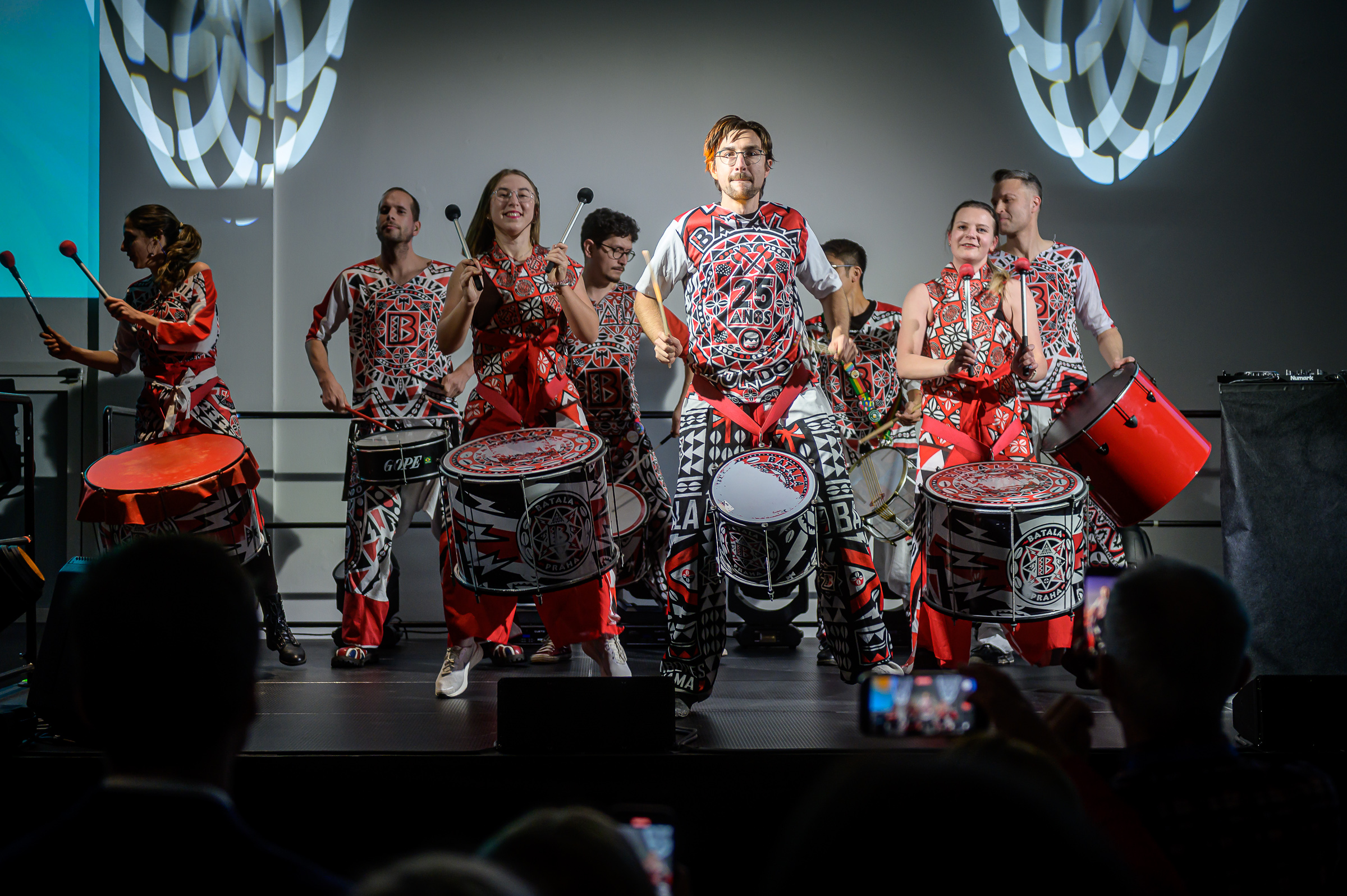
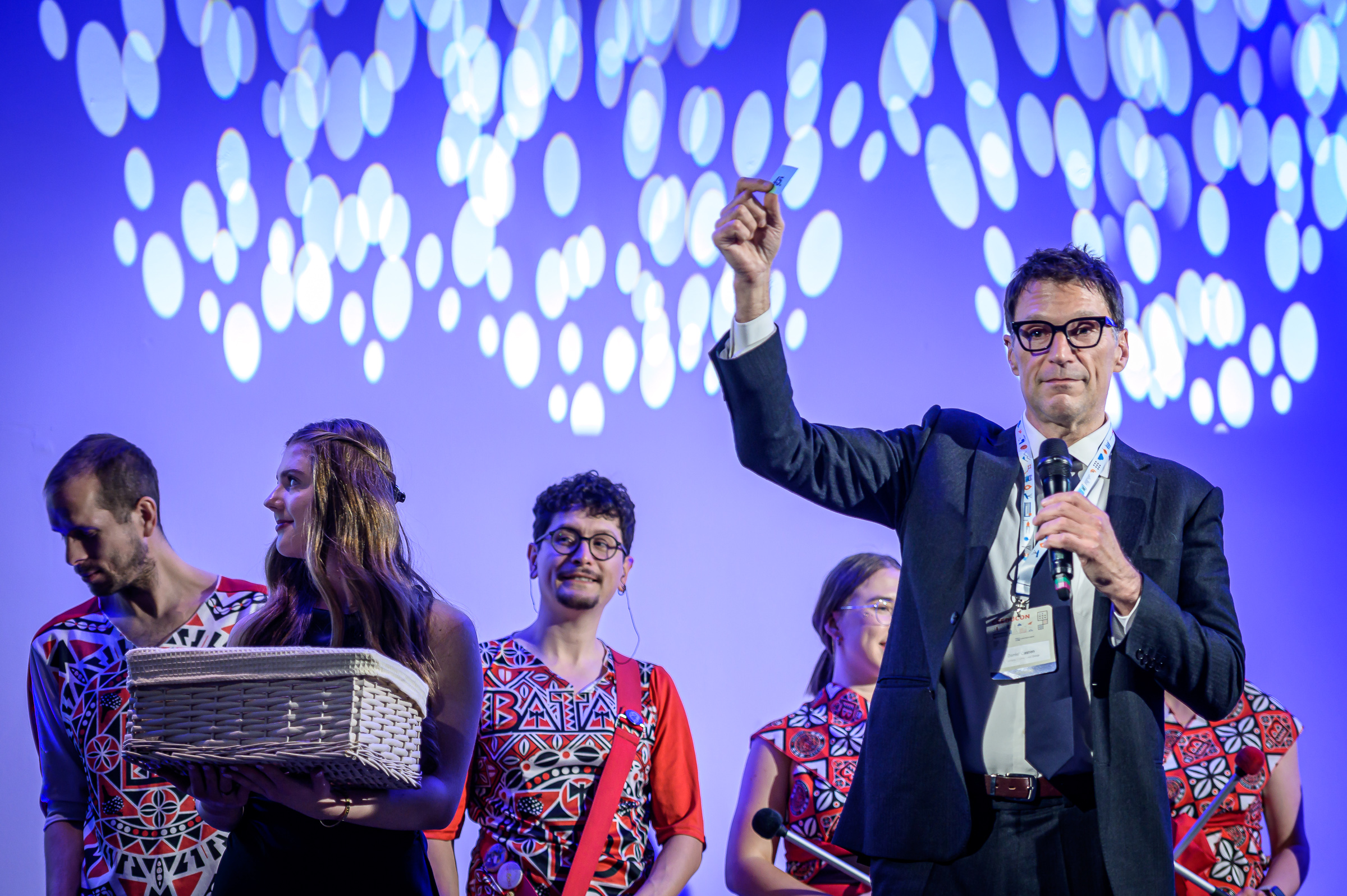
Family photo & Drum Show Performance09:30 - 09:45
-
Dinner & networking09:45 - 10:05
-
End of the Event10:05 - 10:25
Thursday, 20th November
Smart & Sustainable International Cooperation
Internationalisation for All
Global & Regional Partnerships
Alumni — Employability — Future Skills
This session presents a pioneering Social Integration Course tailored for international students in Germany. Covering vital topics—law, culture, work rights, public services, and intercultural skills—it empowers newcomers to navigate life confidently. The goal of this session is to advocate for its adoption across universities to foster smoother transitions and more inclusive campuses nationwide.
Tripti Dhungana - Technical University of Ilmenau
Download the presentation
See the video
Academic institutions today operate at the intersection of education, research, innovation, and international cooperation. While their openness and global engagement are essential to progress, they also bring increasing exposure to risks including illegitimate foreign interference, misuse of partnerships, and threats to research integrity and institutional security. In the context of rising geopolitical tensions, internationalisation is at times exploited in ways that challenge ethical norms, legal frameworks, and national interests. This panel will explore how governments and institutions in the Czech Republic, the United Kingdom, the United States, and the European Union are responding through concrete policies and tools that promote responsible and secure internationalisation. The session will be moderated by Jiřina Fryčová from the Ministry of Education, Youth and Sports of the Czech Republic.
Jiřina Fryčová - Ministry of Education, Youth and Sports of the Czech Republic (Moderator), Lucie Núñez Tayupanta - Ministry of Education, Youth and Sports of the Czech Republic, Otakar Fojt - British Embassy in Prague, Chris Rains - U.S. Embassy in Prague, Jáchym Hercher - European Commission Representation in the Czech Republic
Building on the discussion of national-level strategies, this panel brings together representatives from Czech universities to share their institutional responses to the challenges of responsible and secure internationalisation. Speakers will present a range of approaches, including internal coordination and communication strategies, inter-university cooperation, risk assessment procedures, and the integration of security awareness into academic training. The session will be moderated by Jiřina Fryčová from the Ministry of Education, Youth and Sports of the Czech Republic.
Jiřina Fryčová - Ministry of Education, Youth and Sports of the Czech Republic (Moderator), Jan Platoš - Technical University of Ostrava, Valérie Hůrská - Charles University, Jitka Langová - Palacký University Olomouc, Nina Schreierová - Czech Technical University in Prague, Ľubomír Majerník - Czech University of Life Sciences Prague
The opening presentation will introduce Hungary’s mobility ecosystem, highlighting synergies among European, regional, and nationally funded programmes. While Erasmus+ remains the basis of European academic mobility and CEEPUS offers valuable regional cooperation, Hungary has also developed unique national programmes with strategic relevance, such as the Pannonia Programme. The panel discussion will explore practical experiences and institutional strategies in creating synergies between mobility programmes.
István Verses - Tempus Public Foundation, Kornélia Lazányi - Óbuda University, Alexis Rusinek - University of Lorraine, Yvona Vyhnánková - Palacký University Olomouc
Download the presentation
See the video
Foreign researchers bring not only valuable research output but also international prestige to universities. The International Contact Point at VSB-TUO supports their integration into Czech society. A key factor is the ability to relocate with their family, which introduces challenges that require cooperation with the city, region, and authorities (partner employment, schools, healthcare).
Marek Siwy - Technical University of Ostrava, Michaela Frydrychová - Technical University of Ostrava
Download the presentation
See the video
The session highlights how Ukrainian universities maintain mobility, build international partnerships, and implement dual- degree programmes during wartime. It explores the role of academic diplomacy and effective crisis management in sustaining international cooperation under extreme conditions.
Viktoriia Sokolova - Alfred Nobel University, Nataliia Shpak - Alfred Nobel University
Download the presentation
See the video
The panel brings together representatives of NEOLAiA universities to reflect on the impact they see at their universities after four years of joint efforts. The discussion will focus on sharing practices that help people engage in international collaboration and connect across institutions and professional fields, and on examples diverse ways to reach joint goals and achieve impact on different levels. The audience is invited to ask and comment to help us tailor the discussion to their needs.
Renáta Tomášková - University of Ostrava, Tomáš Drobík - University of Ostrava, Michaela Vogt - Bielefeld University, Ida Andersson-Norrie - Örebro University
Download the presentation
See the video
Stakeholder involvement in the development of regional cooperation within the Alliance of European Universities. The necessity of cooperation between the university environment and the local community, and the benefits of this cooperation for both parties. Sharing good and bad practices in the functioning of this mutual cooperation in different European settings and at different levels, especially in regional university settings.
Kateřina Maršíková - Technical University of Liberec, Ruaidhri Neavyn - Higher Education Authority of Ireland, Ileana Maria Greca Dufranc - University of Burgos, Wayne Johnson - NHL Stenden Hogeschool
Download the presentation
See the video
The European Higher Education Interoperability Framework (HEIF) was launched in early 2025 to address the critical lack of agreed standards that often impedes international student mobility and institutional cooperation. The HEIF was developed under the European Digital Education Hub (EDEH), an initiative of the European Commission. The Framework is organised around the essential use cases for transnational learner journeys and collaboration, starting from joint course catalogues via shared use of tools and education resources to digital credentials. The Framework tackles interoperability challenges at four levels — legal, organisational, semantic and technical — building on existing Bologna Process tools and EU legislative frameworks (e.g. recommendation on automatic recognition, GDPR. The European Student Card Initiative (ESCI) already provides Europe-wide standards and networks for a number of key use cases, such as user identity and mobility automation through the Erasmus Without Paper (EWP) APIs and network. Depending on the use case and specific scenarios, these may provide all necessary capabilities already or can serve as a starting point, with possible extensions to cover all needs identified in the HEIF. The session will provide an overview of the HEIF's resources, current related activities as well as current plans for the ESCI. Participants are invited to discuss concrete interoperability challenges. Attendees will learn how they can use the HEIF to support their institutions' international cooperation goals and understand to which extent the HEIF use cases are already supported by the ESCI.
Colin Tűck - Senior Expert, Knowledge Innovation Centre (KIC)
Download the presentation
See the video
For more than five years, digitalisation in international education has often meant just EWP, and many are ready to move beyond that. This presentation showcases real-life examples and practical tips from international officers who are using digital tools in new and creative ways. You’ll see how a variety of digital solutions simplify and streamline tasks for both incoming and outgoing coordinators, making their work easier and more efficient. Beyond tools, we’ll dive into how adopting a digital mindset can transform daily workflows and elevate student services. By the end, you’ll walk away with fresh ideas, proven methods, and a broader perspective on digitalisation in international mobility.
Daniela Slámová - Prague University of Economics and Business, Ondřej Votinský - Czech University of Life Sciences Prague
Download the presentation
See the video
The European Student Card is a cornerstone of digital transformation in higher education, helping students validate their status, access services seamlessly, and connect across borders. This session will provide an update on the latest developments and opportunities, showing how the initiative delivers concrete benefits for institutions and students alike. From practical steps for adoption to inspiring examples of services already in use across Europe, participants will gain a clear picture of how the ESC is enhancing mobility and collaboration in higher education.
Jeroen van Lent | IT Project Manager | NTT DATA
Download the presentation
See the video
Masaryk University, University of Presov and Vorarlberg University of Applied Sciences will share how they are efficiently implementing the European Student Card Initiative within their institutional ecosystems. The session will focus on practical steps taken to digitalise mobility processes, integrate the Erasmus Without Paper network, and enhance user experience. Presenters will highlight how EWP is embedded into their broader IT systems, ensuring sustainability, interoperability, and added value for students and staff.
Anja Sieghartsleitner - Vorarlberg University of Applied Sciences, Petra Vaňová - University of Prešov, Gabriela Složilová - Masaryk University
Download the presentation
See the video
The topic focuses on the challenges and benefits of involving universities from non-EU countries in European university alliances. It will address the obstacles these institutions, as well as the whole Alliance, face, while also analysing the advantages of participation beyond the EU framework. The aim is to highlight the importance of an inclusive approach within the European Education Area and to open a discussion on the future development of these alliances, with regard to equal opportunities and sustainable partnerships.
Dagmar Vokounová Franzeová - University of West Bohemia in Pilsen, Magdalena Rousová - University of West Bohemia in Pilsen, Inja Stojkić - University of Mostar, Davorka Topić Stipić - University of Mostar
Download the presentation
Four speakers from UWB (Czechia) and OTH Amberg-Weiden (Germany) will lead a four-part interactive workshop. We will present the timeline of our cross-border cooperation, share lessons learned from organising five Czech-German Staff Weeks, and guide a World Café session where participants design their own cross-border CSW concepts and reflect on practical challenges, benefits, and realizations. Participants will leave with concrete ideas and tested strategies for planning similar events.
Romana Suchá - University of West Bohemia in Pilsen, Marian Mure - East Bavarian Technical University of Amberg-Weiden, Klára Frausová - University of West Bohemia in Pilsen, Annabelle Wolff - East Bavarian Technical University of Amberg-Weiden
Download the presentation
Twinning projects under Horizon Europe in strengthening research excellence, international collaboration, and institutional capacities in Widening countries. Challenges in research and innovation capacity. What is Twinning? Why Twinning Matters (enhancing scientific visibility and networking, and support for strategic research areas and interdisciplinary approaches). Success Factors in Twinning Projects; Case Studies and Lessons Learned; Twinning Under Horizon Europe.
Emílie Trakalová - Czech University of Life Sciences Prague, Vítězslav Moudrý - Czech University of Life Sciences Prague, Christopher Marrs - Technische Universität Dresden, Elisa Padulosi - Czech University of Life Sciences Prague, Jan Komárek - Czech University of Life Sciences Prague, David Moravec - Czech University of Life Sciences Prague
Download the presentation
This workshop invites participants to co-create knowledge on how to maximise the potential of BIPs through effective promotion, quality design, and sustainable implementation. We’ll explore diverse formats, including BIPs as a tool for academic professional development and internationalisation at home. We’ll focus on balancing virtual and physical components, fostering interactivity and interdisciplinarity, encouraging diverse outputs, ensuring follow-up, and overcoming organisational challenges.
Jelizaveta Getta - Charles University, Helena Alves - European University Foundation, Lucie Weissova - Halmstad University
Download the presentation
This contribution explores short-term student mobility (5–30 days) as a strategic tool to boost participation in international exchange programmes. It offers flexibility and accessibility, fostering inclusion and student diversity. Key benefits include suitability for students with fewer opportunities, easy integration into study programmes, and motivational potential. Even brief stays yield significant academic, intercultural, and personal development outcomes. The presentation discusses implementation strategies (e.g., BIPs, COILs) and addresses challenges (recognition, administration, funding) with proposed solutions. Short-term mobility is presented as a complementary and forward-looking approach to internationalisation.
Lenka Heczková - Technical University of Ostrava, Veronika Meca - Technical University of Ostrava, Monika Krejzková - Technical University of Ostrava
Download the presentation
The workshop will focus on inclusion and diversity at Palacký University Olomouc and Charles University Prague. The first part will present outcomes from a staff week on inclusion, equality, and diversity, including activities like adapted games for people with disabilities. The second part will discuss support for students with fewer opportunities during their mobility abroad, featuring the story of a student who spent a semester abroad. The goal is to inspire and share ideas from various institutions.
Simona Kostelánská - Charles University, Lucie Ješinová - Palacký University Olomouc, Jana Hrubá - Palacký University Olomouc, Jitka Králová - Palacký University Olomouc, Petra Soldánová - Palacký University Olomouc, Lucie Flekačová - Palacký University Olomouc
Download the presentation
This session examines the barriers faced by and mobility experiences of students with fewer opportunities, drawing on data from the ESNsurvey and qualitative insights from focus groups. It then transitions to an institutional perspective, presenting evidence-informed practices universities have implemented to overcome these barriers. Participants will be introduced to practical tools, including a roadmap and guidelines, designed to advance inclusive and equitable internationalisation support.
Neli Kalinova-Schmieder - Erasmus Student Network, Martin Bogdan - The Academic Cooperation Association
Download the presentation
Where do students live when they study abroad—and what happens when housing isn’t guaranteed? Based on insights from 5,700+ Erasmus+ students, the HOME² survey shows that access to affordable, quality housing is a growing mobility barrier. This session explores new EU-level solutions—labels, guidelines, digital tools—and how HOME² is contributing to the Commission’s Housing Task Force and Affordable Housing plan. We’ll discuss how CEE institutions can adapt, support students, and act.
Wim Gabriels - Erasmus Student Network International, Maria Teresa Gullace - Politecnico di Milano, Ida Velthoven - European University Foundation
Download the presentation
Internationalisation is crucial in university teacher education. To engage effectively in diverse classrooms and prepare students for global citizenship, (future) teachers need intercultural competencies. This session presents a case study from a COIL seminar that explored how to promote intercultural reflexivity in student teachers. Findings show the seminar supports this development, though various factors influence its depth. Implications for teaching and research are discussed.
Annika Brück-Hübner - Justus Liebig University Giessen, Tatiana Joseph - Justus Liebig University Giessen
Download the presentation
This interactive workshop helps institutions make Erasmus+ staff mobility more inclusive and strategic. Participants identify overlooked staff groups, uncover key participation barriers, and develop targeted communication tools. Attendees leave with practical strategies to reach underrepresented staff and strengthen internationalisation across the institution.
Alina Stocklöv - University of Konstanz
Download the presentation
As higher education institutions move beyond traditional mobility models, the focus shifts to creating internationalisation strategies that are inclusive, sustainable, and aligned with national and European priorities. This presentation will highlight the Technical University of Košice’s efforts to make internationalisation accessible to all through institution-wide initiatives and targeted national support from the Recovery and Resilience Plan. Key actions include blended mobility formats, virtual collaboration, intercultural training, and digital integration — each designed to lower barriers and embed global engagement into everyday academic life. Our university’s involvement in a European University Alliance and cross-border cooperation reflects a commitment to building capacity and fostering long-term international partnerships. We will explore how national funding and policy support act as catalysts for institutional innovation, helping to align local efforts with broader strategic goals. Particular attention will be given to the role of digital tools in expanding access and promoting sustainable cooperation models. By offering practical insights, tools, and lessons learned, we aim to contribute to the ongoing discussion around inclusive internationalisation as a driver of systemic change in higher education. This session invites dialogue on how internationalisation can serve as a lever for institution-wide innovation, and how universities can ensure that global engagement is not only smart but also truly for all.
Natália Vašková - Technical University of Košice
Download the presentation
What impact do STEM-focused Erasmus+ Cooperation Partnerships have on skills development, innovation, and institutional collaboration in higher education? This interactive workshop explores how KA220-HED projects can contribute to the European agenda for digital transformation, green transition, and competitiveness. Participants will share experiences from current initiatives and engage in a practical group exercise to design a mini project concept using the Erasmus+ logic model — from needs analysis to measurable impact. Topics explored: • How STEM-related cooperation partnerships support EU policy priorities • The role of KA220-HED projects in driving innovation and skills for the future • Examples of impactful STEM cooperation initiatives across Europe • Translating Erasmus+ objectives into concrete project results and impact • Using the project logic model (Needs → Objectives → Activities → Results → Impact) as a practical tool
Veronika Kulaga, Gerhard Volz - OeAD, Gabriele Permoser - University of Applied Sciences St. Pölten
Download the presentation
This lecture presents a successful example of internationalisation at the University of South Bohemia, displaying how collaboration with European scientific societies has enhanced education and research through specialized training. Since 2004, the FEBS Advanced Course on Macromolecular Crystallization has fostered scientific excellence and global networking through its unique blend of lectures and hands-on training.
Ivana Kutá Smatanová - University of South Bohemia in České Budějovice, Vladimír Žlábek - University of South Bohemia in České Budějovice
Download the presentation
Starting from the European approach, the workshop will present a model developed through multiple transnational collaborations. Stemming from an analysis of the strengths and opportunities of a university-centred attitude to innovation in education, the model puts at its centre the key elements that HEIs should take into account when designing joint MCs within an international partnership. Via a role-play, participants will be led to create their own MC by using the model proposed.
Lara Sorrentino - University of Florence
Download the presentation
The panel will focus on the role of academic values in fostering international collaboration in a rapidly changing world. Participants will explore how higher education institutions can strengthen trust, openness and responsibility in international relations and adapt to global challenges through cooperation based on shared goals and values. The discussion will provide an opportunity to share experiences and explore avenues for enhancing international collaboration in support of scientific and educational development.
Izabela Zawiska - Jagiellonian University, Anna Modrzejewska - Gdańsk University of Technology, Milena Bodych-Biernacka - Polish National Agency for the Erasmus+ Programme and the European Solidarity Corps, Lukáš Pospíšil - Agricultural University of Iceland
This panel explores the internationalisation of teacher education through two European initiatives: the Erasmus+ Teacher Academy TEFF and the EUniWell Teacher Education Arena. It highlights good practices and (trans)local approaches, addressing both challenges and potentials. Participants gain insights into training (future) teachers as global citizens within transnational contexts and learn how structures, networks, and institutional practices can foster meaningful international collaboration.
Jan Springob - University of Cologne, Martine Van Rijswijk - University of Utrecht, Oliver Holz - KU Leuven
Over the past three years, Wszechnica Polska Academy of Applied Sciences in Warsaw has successfully coordinated three editions of BIP, each time in partnership with a growing network of European universities. Each edition expanded in scope, adapting its curriculum to diverse academic backgrounds – from pedagogy and public administration to IT – and emphasizing the value of short-term mobility in fostering interdisciplinary and intercultural learning. In this presentation, we aim to share our organisational experience, highlight best practices, and reflect on both the opportunities and challenges of implementing such programmes, culminating in the most recent edition, which attracted nearly 100 participants.
Marek Smulczyk - University of Warsaw
Download the presentation
Amid escalating global challenges — including climate change, socio-political unrest, and widening inequalities — higher education institutions face increasing pressure to demonstrate their relevance and impact on both local and global scales. Central to this mandate is the integration of the United Nations Sustainable Development Goals (SDGs) into educational practice, institutional strategy, and stakeholder engagement. Drawing on findings from a recent empirical study, this interactive session explores the importance of cultivating globally competent and socially responsible graduates equipped to address these global challenges. The study underscores the importance of embedding global awareness and responsibility early in the student lifecycle to cultivate alumni who are actively engaged in creating transformative sustainable solutions while fostering a continuum of engagement that extends beyond graduation. A highlight of the session is the UK Alumni SDG Ambassador initiative, a flagship programme that mobilises graduates as change agents within their communities. This initiative exemplifies how alumni networks, when strategically aligned with institutional missions, can significantly amplify impact. The session further includes an interactive activity and actionable recommendations for fostering long-term stakeholder engagement while emphasising the vital role of nurturing organisational commitment in advancing the SDGs through education and alumni leadership. Objectives 1. Recognise the strategic role of higher education in advancing the United Nations Sustainable Development Goals (SDGs) through teaching, research, and international collaboration. 2. Examine empirical research findings that link components of global competence and social responsibility with increased commitment for sustainability and climate change. 3. Explore the UK Alumni SDG Ambassador Programme as a model for alumni engagement and community impact. 4. Formulate actionable insights to foster long-term commitment to the SDGs by mobilising alumni networks. Outline • Introduction (5 min): The Role of Higher Education in Advancing the SDGs. • Research Findings (10 min): Global Competence, Social Responsibility and Organisational Commitment to advance the SDGs. • Case Study Presentation (15 min): UK Alumni SDG Ambassador Programme. • Interactive session (15 min): participants work in groups to discuss engagment and the SDGs. • Practical takeaways (5 min) Benefits to Participants • Discover innovative alumni engagement models including best practices from the UK Alumni SDG Ambassador Programme. • Acquire practical tools and frameworks for designing student-to-alumni sustainability pathways. • Learn how to align institutional missions with global development agendas for greater social impact. • Connect with peers and potential collaborators. This session is offered by two professional experts in the fields of international higher education, and international alumni relations and sustainability, innovation and public diplomacy. The speakers represent the Netherlands and the UK.
Sandra Rincon - Tilburg University, Helen Etheridge - British Council
Download the presentation
International graduates represent one of Europe’s most promising resources of talent — culturally agile, globally connected, and often integrated into academic and local ecosystems. Yet retaining these graduates in the European labour market requires more than just a diploma. This interactive session explores how country-based alumni networks can support talent retention, career development, and local connection to root global talent in Europe—socially, professionally, and economically. Drawing on insights from Nuffic’s recent research on international graduate retention for the labour market in the Netherlands, and showcasing Germany’s DAAD Campus Initiative for International Talents, we present scalable, evidence-based strategies for higher education institutions and policymakers seeking to engage international graduates to build institutional support, national innovation, talent retention, and public diplomacy. Session Objectives 1. Gain an overview of country-based alumni engagement initiatives. 2. Understand the role of international talent retention for innovation, economic growth, and public diplomacy. 3. Learn about key factors influencing international graduate retention, labour market participation, and barriers to staying in the host country. 4. Identify practical tools to enhance alumni support and develop local/regional strategies to build a more inclusive and sustainable international student-alumni networks. Session Outline • Introduction (10 min): European initiatives on country-based alumni and the importance of international talent in innovation, economic growth, and public diplomacy. • Research Presentation (10 min): Key findings of Nuffic’s research on international graduate retention in the Netherlands. • Case Study Presentation (10 min): Germany’s DAAD Campus Initiative for International Talents. • Interactive session: audience will work in groups to discuss various topics/questions from the session (15 min) • Summary of Practical takeaways (5 min) Benefits to Participants Participants will gain evidence-based knowledge on why engaging international talent during the student-alumni life cycle is important for institutional and national economic growth, innovation, and international cooperation. Such knowledge and academic evidence can help participants build a case for support in building international student-alumni engagement programmes. Participants will leave with practical insights (good practices) on engaging international students in starting their careers and international alumni in staying after graduation. These insights can support new or already established alumni relations programmes. This session is offered by three academic and professional experts in the fields of international higher education, alumni relations and international alumni networks’ impact through employability, economic growth, sustainability, innovation, and public diplomacy. The presenters represent Germany and the Netherlands and have more than 40 years of combined expertise in the field of internationalisation of higher education.
Sandra Rincon - Tilburg University, Ekaterina Ershova - German Academic Exchange Service, Ece Arat - Nuffic
Download the presentation
In a lively panel discussion format, alumni programmes from Germany, France, Hungary and Czechia will be introduced. The discussion will explore the rationale behind the creation of these programmes, the challenges encountered, and the solutions developed in response. Special attention will be given to best practices in alumni management, highlighting successful examples and innovative approaches.
Julie Ševeleva - Czech National Agency for International Education and Research, Mathilde Lagarde - French Embassy in the Czech Republic, Heidi Wedel - German Academic Exchange Service, Viktória Stift - Tempus Public Foundation
-
REGISTRATION OPEN09:00 - 09:15
-
Welcome coffee09:15 - 09:30
-
Entry-gation09:30 - 10:00
-
10:00 - 10:05
-
Responsible and Secure Internationalisation in Higher Education: National Approaches from CZ, UK, US and EU10:05 - 10:35
-
Coffee Break10:35 - 10:50
-
Responsible and Secure Internationalisation in Higher Education: Institutional Perspectives and Practical Responses10:50 - 11:20
-
11:20 - 11:25
-
Regional and Global Synergies in Higher Education Mobility: A Hungarian Perspective11:25 - 11:55
-
11:55 - 12:00
-
Closing12:00 - 12:15
-
Lunch12:15 - 12:30
-
ICP: Active Role in Family Relocation09:30 - 10:00
-
Internationalisation in Times of War: Challenges and Adaptive Strategies10:05 - 10:35
-
Success Factors and Challenges in Building a European University Alliance: Reflecting on Diverse Ways to Reach Joint Goals and Achieve Impact10:50 - 11:20
-
Stakeholders as a Cornerstone of Regional Development11:25 - 11:55
-
Seamless student journeys: from identity to interoperability09:30 - 10:00
-
Ctrl+Shift+Exchange: Unlocking Digital Tools and Mindsets10:05 - 10:35
-
A deep-dive into the European Student Card10:50 - 11:20
-
From Interoperability to User Experience: ESCI Champions’ Practices in Digital Mobility11:25 - 11:55
-
Challenges and Benefits of Partnerships with Non-EU Universities in European University Alliances09:30 - 10:00
-
From Experience to Action: Co-Creating Cross-Border Staff Weeks10:05 - 10:35
-
From Widening Country to Research Leader: Lessons from Twinning Coordination10:50 - 11:20
-
Going International by BIPs – Let's Co-Create the Know-How!11:25 - 11:55
-
12:00 - 12:15
-
Short-Term Student Mobility as a Tool for Promoting and Increasing Mobility Numbers09:30 - 10:00
-
Inclusion and Diversity – Sharing Experiences, Finding Ways10:05 - 10:35
-
From Student Voices to Institutional Action: Building Inclusive Mobility10:50 - 11:20
-
No Room, No Mobility: How Data and Digital Tools Can Solve Europe’s Student Housing Gap11:25 - 11:55
-
Can We Enhance Intercultural Reflexivity Through Virtual Intercultural Exchange? A Case Study09:30 - 10:00
-
From Barriers to Breakthrough: Identifying Audiences, Understanding Obstacles, and Communicating Inclusive Erasmus+ Staff Mobility10:05 - 10:35
-
Internationalisation for All – Sustainable and Inclusive Practices Backed by National Policy Support10:50 - 11:20
-
Erasmus+ cooperation partnerships: The impact of STEM projects11:25 - 11:55
-
Building Expertise and Networks at the University of South Bohemia: Two Decades of FEBS Practical Crystallization Courses09:30 - 10:00
-
Micro-Credentials: From the European Concept to an Effective International Programme10:05 - 10:35
-
Shared Academic Values in a Changing Global Landscape10:50 - 11:20
-
Creating Global Citizen Learners: The Importance of an International Teacher Education11:25 - 11:55
-
The Evolution of BIP: Opportunities and the Potential of Short-Term Mobility – An Organisational, Lifelong Learning, and Internationalisation Perspective09:30 - 10:00
-
Global Competence for a Sustainable Future: International Alumni as Changemakers10:05 - 10:35
-
Global Graduates, Local Futures: How Alumni Networks Anchor Talent in Europe10:50 - 11:20
-
Alumni Programmes: Four Examples11:25 - 11:55
Contact
For more information please contact us at
ceeducon@dzs.cz or +420 221 850 100